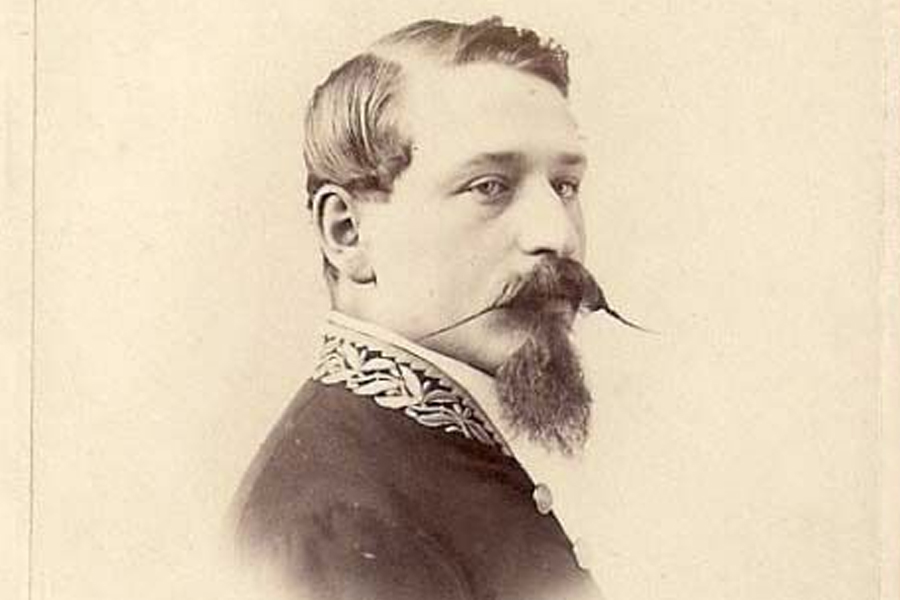
Basic Information
| Field | Details |
|---|---|
| Full name | Alexandre Louis-Ernest Bure |
| Birth | 18 to 19 March 1845, Batignolles-Monceau, Paris |
| Death | 11 February 1882, 69 rue de Miromesnil, Paris |
| Father | Napoleon III (Charles-Louis Napoléon Bonaparte) |
| Mother | Éléonore Vergeot |
| Adoptive father | Pierre Bure |
| Siblings | Eugène Bure (elder brother), Jean Bure (younger half-brother) |
| Spouse(s) | First wife in Puebla, Mexico, name unconfirmed; Marie-Henriette Paradis (married 12 March 1879, Paris) |
| Children | Georges Henri Louis Bure de Labenne (born 20 March 1880, died 1884) |
| Title | Count of Labenne, created June 1870 |
| Occupations | Court and finance official, receiver general designate, local administrator in Brittany |
| Notable residences | Paris; Puebla, Mexico; Paimpol in Brittany (Villa Labenne) |
Origins and the Family Web
Paradoxical birthplace for Alexandre Bure. Despite being Napoleon III and Éléonore Vergeot’s son, Napoleon never recognized him. Eugène and Alexandre were born from the relationship while Napoleon III was imprisoned at Ham Fort. While the imperial court avoided official recognition, the Emperor provided for Éléonore and a guardian for the boys. Pierre Bure, Napoleon III’s adoptive brother and valued colleague, married Éléonore in 1858 and became her guardian.
Pierre Bure did more than provide his name. He established a stable household, adopted the boys, and supported their social standing. Alexandre was descended from Louis Bonaparte and Hortense de Beauharnais and Carlo Buonaparte and Letizia Ramolino through the Emperor. However, Pierre Bure taught him how to work in administration and finance, not imperial ceremonial.
Early Steps in Service and the Mexican Interlude
Alexandre joined the Crown’s treasurer general’s secretariat in 1865, the financial hub of the empire. His first stage was paper, ink, and account choreography. However, the French mission to Mexico drew him into a continental drama promising excitement and advancement. He served in Mexico, quit the army, married in Puebla, and sought to settle down. Surviving chronicles record the marriage without a name and its failure.
Mexico made him worldly but not wealthy. Late in 1869 he returned to France, a man of practical energies and fugitive ambitions. The empire offered him one more opening, and Napoleon III extended a decisive hand.
Crest and Crash in 1870
Alexandre became Count of Labenne and financial receiver general in June 1870. The stage lights briefly brightened. He was near the top of a provincial financial structure that routed state resources due to his prominent title and powerful office. He is considered Napoleon III’s last French ennobled.
Then the world shifted. The collapse of the Second Empire in the Franco Prussian War stopped his appointment before it could truly start. Like a tide pulled out by a sudden moon, the supports of his newfound elevation vanished. Titles lingered in the air. The salary and the station did not.
Marriage, Money, and a New Start in Brittany
Alexandre married affluent heiress Marie-Henriette Paradis, daughter of banker Jean-Baptiste Paradis, in Paris on March 12, 1879. This marriage brought love and money. Alexandre worked alongside Charles Tellier, a pioneering engineer in refrigeration and cod drying, on an industrial project at Paimpol, Brittany, by the sea. Energy and technical promise characterized the proposal.
Sea politics exist. Local interests resisted a factory that could affect job and trading patterns. A project was abandoned. Just buildings and a name survived. Their Paimpol home was renamed Villa Labenne, a small Breton street heraldry rather than a Paris salon.
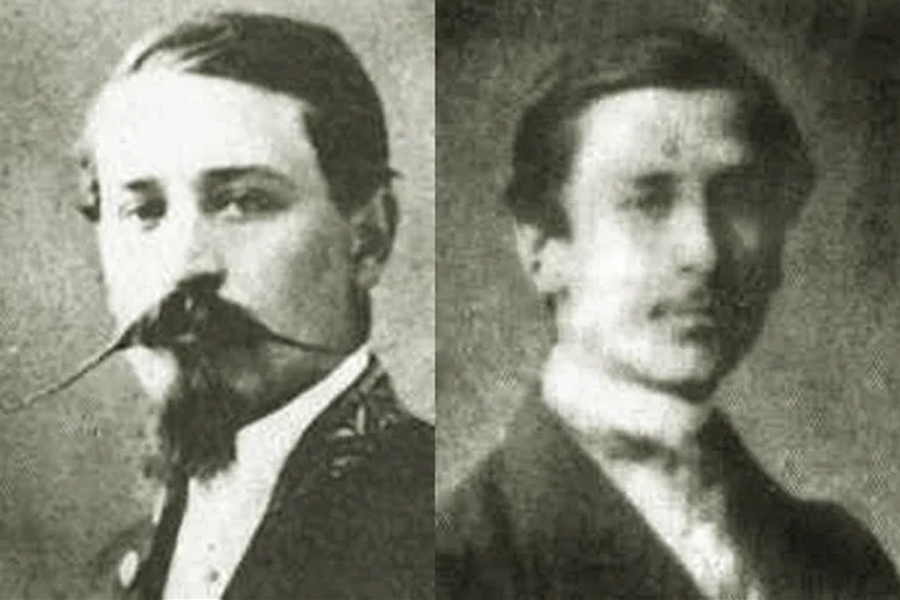
A Local Life: Villa Labenne and Civic Duty
Alexandre did not rest. He led the Paimpol gendarmerie from 1880 to 1882, experiencing port town life daily. He and Marie-Henriette had Georges Henri Louis on March 20, 1880. Brittany’s sea air softened his former austerity, and the Villa Labenne became a home rather than imperial court.
He died at 69 rue de Miromesnil on 11 February 1882 after returning to Paris due to illness. His Brittany grave. Two years later, young Georges died in 1884. Father and son were buried together, and the sorrow was Bonapartist. Sympathizers perceived an imperial past in the Bure family at an 1885 ceremony.
Afterlife of a Project and a Name
After widowhood, Marie-Henriette married Louis Auguste Dupont. Her new spouse and she tried to restore Alexandre’s Tellier-drawn drying operations. The company went bankrupt in 1887 due to economic and local winds. The physical evidence remained. A drying building from the project became Paimpol’s marine museum, a sturdy shell protecting a separate memory.
Villa Labenne likewise lived on in local recollection. For the town, the house remained a shorthand for the Bure story, a small monument to ambition, reinvention, and grief.
Brothers, Names, and Titles
Alexandre’s older brother Eugène Bure took another route. His diplomatic career earned him the title Count of Orx in 1870. Their younger half-brother Jean Bure was Pierre and Éléonore’s biological son. The Bure surname, once an adoption convenience, guided the family through the tumultuous politics of the 1860s and 1870s.
Alexandre’s title, Count of Labenne, is like a sunset. It came with the last dash of imperial power and outlived its vessel. He softly wore it in Brittany, where it told his narrative rather than granting authority.
Lineage, Identity, and the Politics of Silence
Alexandre’s descent from Louis Bonaparte and Hortense de Beauharnais is correct yet controversial. His father didn’t acknowledge him. The outcome was a life alongside the Bonaparte story without belonging. In practice, his identity was three-fold. The bloodline and sometimes ladder up comes from Napoleon III. Pierre Bure gave the name and upbringing. Éléonore Vergeot provided a solid motherly presence and family-sustaining concerns.
Identity in such circumstances is a kind of palimpsest. Titles, offices, and addresses are written over the same person, and the old lines never quite disappear.
Select Timeline
| Year | Event |
|---|---|
| 1845 | Born in Paris, 18 to 19 March, to Napoleon III and Éléonore Vergeot |
| 1858 | Éléonore Vergeot marries Pierre Bure, who adopts Alexandre and Eugène |
| 1865 | Enters the secretariat of the treasurer general to the Crown |
| 1860s | Serves in the French expedition to Mexico, marries in Puebla, attempts civilian life |
| 1869 | Returns to France late in the year |
| June 1870 | Created Count of Labenne and named receiver general of finances |
| 1870 | Fall of the Second Empire prevents him from taking office |
| 1879 | Marries Marie-Henriette Paradis in Paris on 12 March |
| 1880 | Son Georges Henri Louis is born on 20 March; family settles in Paimpol |
| 1880 to 1882 | Leads the Paimpol gendarmerie; pursues an industrial drying project that is later abandoned |
| 1882 | Dies in Paris on 11 February; buried in Brittany |
| 1884 | Death of his son Georges; later ceremony in 1885 draws local Bonapartists |
| 1887 | Revival of the drying works by his widow and her new husband ends in bankruptcy |
FAQ
Was Alexandre Bure recognized by Napoleon III?
No, he was not formally recognized, although the Emperor ensured support for his mother and oversight by Pierre Bure.
What title did Alexandre hold?
He was created Count of Labenne in June 1870, a distinction often described as one of the final ennoblements of the regime.
What role did he have in finance?
He was named receiver general of finances, but the fall of the Second Empire prevented him from assuming the post.
Did Alexandre marry and have children?
Yes, he married in Puebla, Mexico, though the name of that spouse is not securely recorded, and later married Marie-Henriette Paradis; they had a son, Georges Henri Louis.
Why did he live in Paimpol?
He moved to Brittany with his wife to pursue an industrial drying project and to build a household at Villa Labenne.
What happened to his industrial plans?
They were opposed locally and abandoned, then briefly revived by his widow and her second husband before ending in bankruptcy in 1887.
When and where did he die?
He died in Paris on 11 February 1882 at 69 rue de Miromesnil and was buried in Brittany.