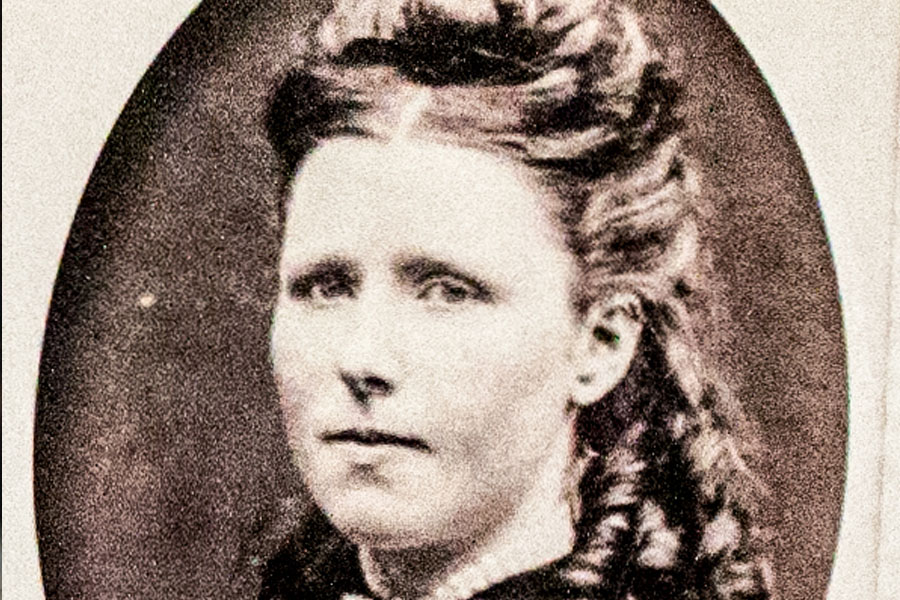
Basic Information
| Field | Details |
|---|---|
| Full name | Anna Cornelia van Gogh |
| Born | 17 February 1855 |
| Birthplace | Zundert, Noord-Brabant, Netherlands |
| Died | 20 September 1930 |
| Death place | Dieren, Gelderland, Netherlands |
| Parents | Reverend Theodorus van Gogh and Anna Cornelia Carbentus |
| Siblings | Vincent, Theo, Elisabeth Huberta (Lies), Willemina Jacoba (Wil), Cornelis Vincent (Cor) |
| Spouse | Joan Marius van Houten, shell-lime manufacturer |
| Marriage date | 22 August 1878 |
| Children | Anna Theodora van Houten (born 1883), Sara Maria van Houten |
| Early occupations | French teacher in England, lady’s companion |
| Later occupation | Homemaker |
| Residences | Zundert; London and Welwyn in England; Hengelo; Leiderdorp; Dieren |
| Noted relationships | Distant relationship with brother Vincent; steady family life with husband and daughters |
Early Years and Education
Anna Cornelia van Gogh, the second child and first daughter of a Dutch Reformed family, was born in Zundert, a small village, in 1855. Mother Anna Carbentus brought the aroma of paper and ink from her Hague bookbinding family and a love of painting flowers. Her father, Theodorus, was a priest with stable habits and high aspirations. The modest but intellectually curious parsonage mixed discipline and tenderness like lines and color on a canvas.
Anna went to residential school in Leeuwarden, indicating the family’s goals for her. Her language and etiquette talents got her across the Channel and into early paid labor. Though they traveled on narrower paths than their brothers, the Van Gogh sisters shared a household full of letters, passion, and the changing Dutch light.
Across the Channel: English Interlude and Apprenticeship to Adulthood
Anna, 19, moved to England from the Netherlands in 1874. Through 1876, she taught French in London and Welwyn, contrasting city life with rural life. It was an important test of independence and the value of her education in a world with few decent jobs for women.
She returned to the Netherlands in 1877 to be a lady’s companion to the Van Houtens in Hengelo. The job required tact, language, and social grace. It led to marriage. Anna married Joan Marius van Houten, a shell-lime producer who linked seashore business to Dutch town expansion, on August 22, 1878. The shift from governess duties to marriage was quick.
Marriage, Household, and Work
The Register of Civil Affairs covered Anna’s marriage more than the public. They originally lived in Zuid-Holland, where their oldest daughter, Anna Theodora, was born in Leiderdorp in 1883. Another daughter, Sara Maria, followed. The family moved to Dieren, where Anna died in 1930.
The shell-lime trade, which turned seashells into lime for construction and agriculture, protected the family. Sea became stone for canals, farms, and brick facades using nineteenth-century practical chemistry. Anna prioritized family, home, and children before public service and art. A respectable middle-class life with routine and duty.
Household Milestones
| Year | Event |
|---|---|
| 1878 | Marriage to Joan Marius van Houten |
| 1883 | Birth of daughter Anna Theodora in Leiderdorp |
| 1880s to 1920s | Residence in the Netherlands, later in Dieren |
| 1930 | Death and burial in Dieren |
Relationship with Vincent and the Sibling Constellation
Family gravity affected each Van Gogh child differently. Anna’s brothers Vincent and Theo were the famed artist-dealer duo, united by letters that still sing. Anna wrote less often. After their father’s death in 1885, her estranged relationship with Vincent broke down. There may have been a family dispute or a shift in sympathies. Vincent treated her well in letters to others, but no lasting relationship is known.
She kept tight ties to the non-artist relatives. Theo served as a link between Lies and Wil, her sisters, who lived in a strict but loving family. Cor, the youngest brother, died in 1900 in South Africa, according to several reports. Anna outlived her father, artist brother, art-dealer brother, and youngest son by 1907, when her mother died.
Family Roster at a Glance
| Name | Lifespan | Role and Notes |
|---|---|---|
| Theodorus van Gogh | 1822 to 1885 | Father, Dutch Reformed pastor |
| Anna Cornelia Carbentus | 1819 to 1907 | Mother, from a Hague bookbinding family, amateur artist |
| Vincent van Gogh | 1853 to 1890 | Older brother, painter; distant relationship with Anna |
| Anna Cornelia van Gogh | 1855 to 1930 | Subject; teacher and companion in youth, homemaker in adulthood |
| Theodorus “Theo” van Gogh | 1857 to 1891 | Brother, art dealer; strong family ties |
| Elisabeth Huberta “Lies” van Gogh | 1859 to 1936 | Sister; married with children |
| Willemina Jacoba “Wil” van Gogh | 1862 to 1941 | Sister; remained unmarried; close to family matters |
| Cornelis Vincent “Cor” van Gogh | 1867 to 1900 | Younger brother; died in South Africa |
| Joan Marius van Houten | 1850 to 1945 | Husband, shell-lime manufacturer |
| Anna Theodora van Houten | born 1883 | Daughter |
| Sara Maria van Houten | dates not specified | Daughter |
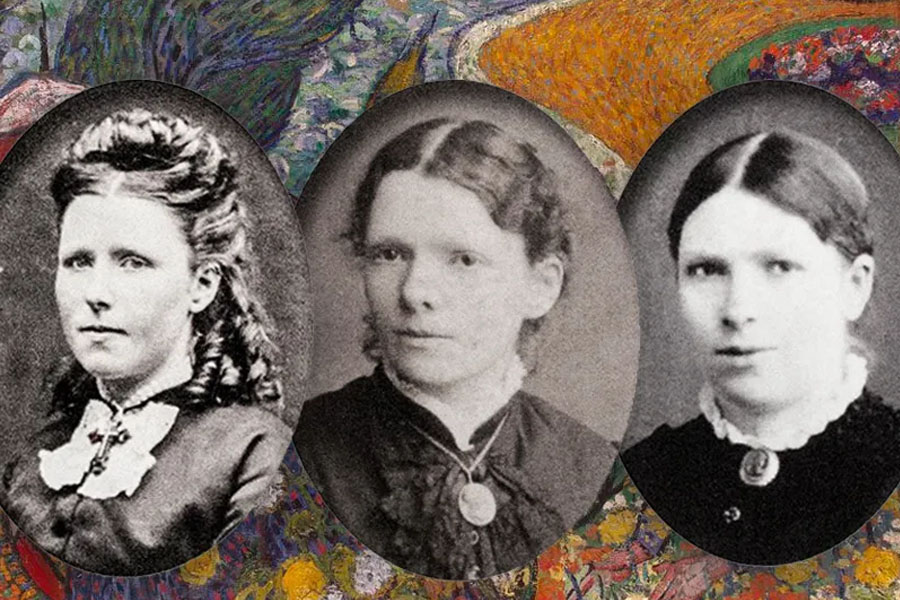
Timeline: Key Dates
| Date | Event |
|---|---|
| 17 Feb 1855 | Birth in Zundert |
| 1860s to early 1870s | Boarding school in Leeuwarden |
| 1874 to 1876 | Lives in London and Welwyn; teaches French |
| 1877 | Lady’s companion in Hengelo |
| 22 Aug 1878 | Marries Joan Marius van Houten |
| 1883 | Daughter Anna Theodora born in Leiderdorp |
| 1885 | Death of father; estrangement from Vincent solidifies |
| 1890 | Vincent dies |
| 1891 | Theo dies |
| 1900 | Cor dies in South Africa |
| 1907 | Mother dies |
| 20 Sep 1930 | Death in Dieren |
Places and Social Landscape
Life was a map of parsonages, schools, and provincial towns for Anna. Zundert offered childhood dirt. England introduced her to new pupils, employers, and languages. Hengelo led to marriage. She raised her girls in Leiderdorp and then Dieren, where her husband’s industry paid the bills.
The shell-lime industry connected rural and urban demand. Mortar, whitewash, and agriculture used lime from burned seashells. This was the infrastructure behind canal walls, farmhouse sheds, church repairs, and shopfronts. Not glamorous, but steady. No connection to the cocoa family exists, but the van Houtens were manufacturers. Anna’s life is a monument to the many nineteenth-century women who supported their families while their brothers and husbands worked in public.
Ancestry in Brief
| Line | Names and Notes |
|---|---|
| Maternal grandparents | Willem Carbentus and Anna Cornelia van der Gaag; Hague bookbinding lineage |
| Paternal grandparents | Vincent van Gogh, pastor, and his wife; clerical tradition |
| Earlier ancestors | Johannes van Gogh; Arie van der Gaag; Clara van Nieropperhout; Johanna van der Veen; names preserved in family trees |
Legacy and Memory
Anna left a softer mark than her brother’s paintings. A practical sister who traveled the North Sea for employment and settled into a good Dutch household is mentioned in letters and documents. She avoided publicity. The Van Gogh family story is incomplete without her, the sister whose modest path explains Vincent’s sensibility and the network of care that supported and occasionally stretched him.
Modern curiosity has transformed the Van Gogh sisters from silhouettes to human forms. Anna stays elusive. Her diaries, correspondence, and word-portrait are not generally available. The portrait we have includes dates, addresses, births, burials, and a few observations from others. It’s enough to see a life of obligation and modest aims.
FAQ
Who was Anna Cornelia van Gogh?
She was the older sister of painter Vincent van Gogh, born in 1855 and deceased in 1930, who lived a largely private middle-class life in the Netherlands.
How was she related to Vincent van Gogh?
Anna was Vincent’s younger sister by about two years and part of the same close-knit but sometimes tense minister’s family.
What did she do for work?
Before marriage she taught French in England and worked as a lady’s companion, then became a homemaker.
Did she have children?
Yes, two daughters named Anna Theodora and Sara Maria.
Where did she live?
She was born in Zundert, lived in London and Welwyn in the mid-1870s, worked in Hengelo, and later lived in Leiderdorp and Dieren.
Why did she and Vincent become estranged?
Their relationship was already cool, and after their father’s death in 1885 a rift solidified, likely due to family tensions.
Did she leave letters or diaries?
No extensive diaries or collections of her letters are publicly known.
Was her husband linked to the Van Houten cocoa family?
No, her husband’s family worked in shell-lime manufacturing and had no documented connection to the cocoa dynasty.
How did her brother Cor die?
He died in South Africa in 1900, with contemporary reports varying on the circumstances.
When did she die and where is she buried?
She died on 20 September 1930 in Dieren and is buried there alongside her husband.