Basic Information
| Field | Details |
|---|---|
| Full name | Michaelangelo Barbato |
| Also known as | Mike Barbato |
| Birth | May 18, 1888, Naples, Campania, Italy |
| Parents | Bartolomeo Barbato and Madalena Scotti |
| Immigration | Arrived in New York on November 4, 1903, aboard the Calabria |
| Occupation | Plasterer |
| Primary residences | Jersey City, New Jersey; later California |
| Marriage | Giovanna Jennie Fogacci, circa 1907, New Jersey |
| Children | Eight, including Nancy Rose, Constance, Bartholomew Michael, Julia Angelina, Madaline, Aida, and two others |
| Death | November 21, 1961, Whittier, Los Angeles County, California, age 73 |
| Burial | Mission Hills, California |
| Notability | Father of Nancy Rose Barbato, first wife of Frank Sinatra |
A Working Man from Naples
Michaelangelo Barbato was born in Naples in 1888, a city full of vitality and struggle. Southern Italians were leaving by the shipload when he grew up. He boarded the Calabria for New York at 15 with only guts and work ethic. He would never be famous or elected. He became silent but essential to any family story: a foundation stone.
When his ship docked on November 4, 1903, the American industrial century was underway. Michaelangelo patiently painted walls and ceilings after mastering the crafts. Poetic lime and sand plasterwork. Consistent, accurate. He maintained those traits throughout his life.
Building a Life in Jersey City
He found community, wages, and Italian neighbors in Jersey City. Plastering paid rent and fueled the stove. The seasonal, physical work was demanding. His signature instrument was the trowel. Payments were modest, closer to survival than surplus, but constant enough for an expanding family.
The early 1900s had headwinds. Many families struggled with anti-immigrant prejudice, unemployment, and the Great Depression. However, Michaelangelo always brought his lunch pail, like morning. His reputation was not based on awards. Built on hours.
Marriage to Jennie Fogacci and a Growing Household
Giovanna Jennie Fogacci, an 1892 Italian immigrant, married Michaelangelo around 1907. They formed a family with many children, lovingly cooked meals, and a workday-Sunday schedule. They raised their family in Jersey City, where row houses and Catholic life dominated.
Jennie’s passing in 1958 ended a union that had stretched across half a century. Three years later, Michaelangelo would follow her, dying in Whittier at 73. What they built together, however, was far from finished.
Children and Descendants
The Barbatos had eight children, typical of Catholic Italian-American families. Their daughter Nancy Rose married Frank Sinatra, a young singer. That relationship gave the Barbatos fame, but their home was never a stage. The kitchen table, front stoop, workshop, and church pew were there.
Children of Michaelangelo and Jennie
| Name | Birth details | Notes |
|---|---|---|
| Constance Barbato | circa 1908 | Early child of the household, limited public record |
| Bartholomew Michael Barbato | circa 1910 | Namesake of Michaelangelo’s father |
| Julia Angelina Barbato | January 21, 1911, Jersey City | Appears in early household records |
| Nancy Rose Barbato | March 25, 1917 | Married Frank Sinatra in 1939; lived to 101 |
| Madaline Barbato | unknown | Listed in family records |
| Aida Barbato | unknown | Listed in family records |
| Child 7 | unknown | Part of the eight-child count |
| Child 8 | unknown | Part of the eight-child count |
Grandchildren and Great-grandchildren through Nancy
- Grandchildren: Nancy Sinatra born 1940, Frank Sinatra Jr. born 1944 and died 2016, Tina Sinatra born 1948.
- Great-grandchildren often associated with this branch include AJ Lambert, Amanda Kate Lambert, Michael Francis Sinatra, Francine Sinatra Anderson, and Natalie Oglesby Skalla.
These names reflect important dates. Birth united two families in 1917. A 1939 wedding linked the Barbatos to an American music hall of fame surname. A line that grew into the 21st century, remembering the immigrant who lay the first American brick.
Westward Move and Final Years
The Barbatos traveled west like many midcentury American families. California brought new addresses, parishes, and a softer sun. Michaelangelo was in his eighties when his children founded their own lives and grandchildren learnt to walk in the late 1950s. He died in Whittier on November 21, 1961, and was buried at Mission Hills. Since that 1903 passage, his world changed drastically. Young plasterer from Naples became patriarch of a large American clan.
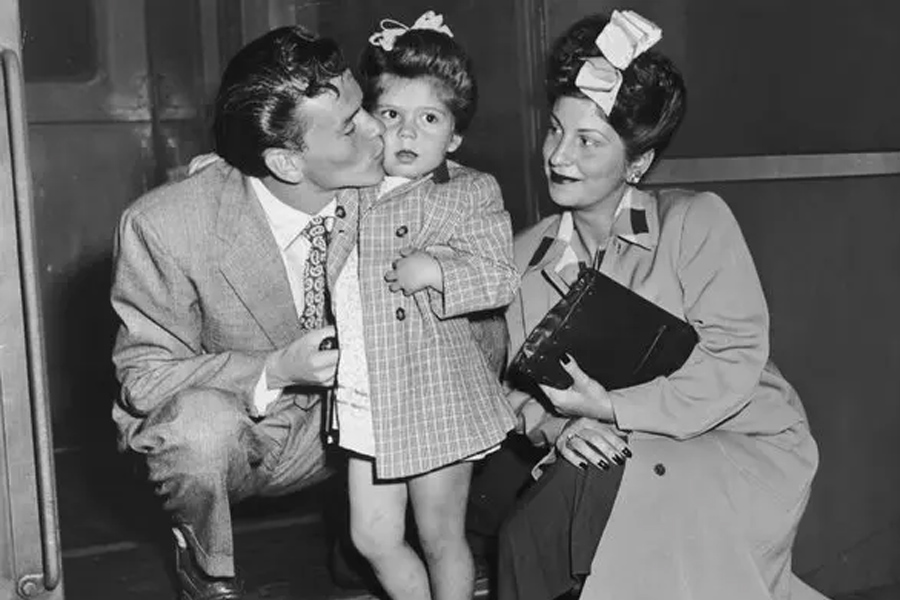
Character and Legacy
Michaelangelo’s legacy is not captured in headlines or plaques. It lives in family lore and in the quiet dignity of manual labor. If the Sinatra name is a marquee light, the Barbato name is the wiring behind it, running through the beams and joists, keeping everything humming.
He follows a typical early 1900s immigrant path. Hard entry. Hard work. Large family that anchors and sails. No scandal gets in the way. Zero public office. Lack of luck. Instead, a life of routine days—a life most of us know. Best known as a parent, grandpa, tradesman, and family man who honored his promises.
Timeline of Key Dates
| Date | Event |
|---|---|
| May 18, 1888 | Born in Naples, Italy |
| November 4, 1903 | Arrived in New York City on the Calabria |
| circa 1907 | Married Giovanna Jennie Fogacci in New Jersey |
| January 21, 1911 | Birth of daughter Julia Angelina in Jersey City |
| March 25, 1917 | Birth of daughter Nancy Rose |
| February 4, 1939 | Nancy married Frank Sinatra |
| 1940 to 1948 | Births of grandchildren Nancy, Frank Jr., Tina |
| 1958 | Death of wife, Jennie Fogacci |
| November 21, 1961 | Death in Whittier, California |
| Post 1961 | Burial in Mission Hills; family lineage broadens through grandchildren and great-grandchildren |
Work and Community in Context
Imagine him balancing on scaffolds, hands white with gypsum, reading walls like farmers study clouds to understand his daily life. The first half of the 20th century demanded quickness and touch when plastering. Fixes winter damage. Rising housing towers get new coatings. Commission checks were unusual. Overtime was common. The labor was unsung but skilled.
Community followed Italian-American neighborhood patterns. Sunday dinners, baptisms, funerals, and feasts united people. Like fish in a tidal inlet, youngsters switch between English at work and Italian at home. In such currents, a father need not be famous. He needed presence.
The Barbato-Sinatra Connection
Michaelangelo was best known through his daughter Nancy. Her 1939 marriage to Frank Sinatra made the Barbatos famous. That link piqued public interest in a private family. Still, the Barbatos were mostly ignored. They influenced childcare, holiday parties, and the bridge between old-country norms and American ideals in subtle ways.
As grandkids and great-grandchildren arrived, the tree grew. The family emphasises devotion and resilience in musicians, performers, and individuals. Generations later, the story still features a young Neapolitan with callused hands and a work ethic.
FAQ
Who was Michaelangelo Barbato?
He was an Italian-born American plasterer, husband, and father whose life embodied the immigrant working-class experience of the early 20th century.
How was he connected to Frank Sinatra?
He was the father of Nancy Rose Barbato, who married Frank Sinatra in 1939.
When and where was he born?
He was born on May 18, 1888, in Naples, Campania, Italy.
When did he immigrate to the United States?
He arrived in New York on November 4, 1903, as a 15-year-old passenger on the Calabria.
What did he do for a living?
He worked as a plasterer, a skilled trade in construction.
Where did he live in the United States?
He lived primarily in Jersey City, New Jersey, and later in California.
Whom did he marry and how many children did they have?
He married Giovanna Jennie Fogacci around 1907, and together they had eight children.
When did he die and where is he buried?
He died on November 21, 1961, in Whittier, California, and is buried in Mission Hills.
Did he have public honors or controversies?
There is no public record of notable honors or controversies associated with his life.
What is his most recognized legacy?
His legacy is familial, particularly through his daughter Nancy, and the extended Barbato-Sinatra family.