Basic Information
| Field | Detail |
|---|---|
| Full name | Hannah Margaret Penn, née Callowhill |
| Birth | 11 February 1671, Bristol, England |
| Death | 20 December 1726, London, England |
| Burial | Jordans Quaker Burial Ground, Buckinghamshire |
| National identity | Anglo-American |
| Faith | Quaker |
| Role | Acting Proprietor of Pennsylvania, 1712 to 1726 |
| Notable first | First and only woman to govern colonial Pennsylvania |
| Spouse | William Penn, married 5 March 1696 |
| Children | 9 total, 5 survived to adulthood |
| Parents | Thomas Callowhill and Hannah (Anna) Hollister |
| Residences | Bristol; Philadelphia’s Slate Roof House; Pennsbury Manor; later London |
| Honors | Honorary United States Citizen, 1984; recognized as Pennsylvania’s first female governor, 2013 |
| Named for her | Callowhill Street, Philadelphia |
A Merchant’s Daughter With a Ledger for a Compass
Bristol native Hannah Callowhill Penn counted buttons and fabric bolts. Thomas Callowhill, a successful Quaker merchant, taught her arithmetic, inventory, and how to hold a balance sheet on his shop floors. Hannah Hollister, her mother, taught her to see the poor and practical. When she headed a colony, her ledger and conscience guided her.
By her mid-20s Hannah possessed a rare combination of patience and precision. In a world that read women as household shadows, she learned to read contracts, weigh risks, and keep books that actually balanced.
Marriage to William Penn – A Household and a Province
Hannah, 25, married 52-year-old Pennsylvania founder William Penn, a widower, on March 5, 1696. The merger linked a Bristol mercantile house to a transatlantic religious liberty experiment. While pregnant, she crossed the Atlantic to Pennsylvania in 1699. She lived at Pennsbury Manor in Bucks County and Philadelphia’s Slate Roof House while learning the new world’s rhythms—floods, harvests, and church.
The couple returned to England in 1701 amid financial turbulence, with Hannah increasingly the quiet architect behind the family’s solvency and the colony’s stability.
Motherhood and Loss
Hannah bore nine children in twelve years. Only five lived to adulthood, a sorrowful arithmetic common in the era yet harrowing to endure. Her family book looked like this:
| Child | Lifespan | Notes |
|---|---|---|
| Unnamed daughter | 1697 | Died at birth |
| John Penn “the American” | 1700 to 1746 | Eldest surviving son, never married, held proprietary shares |
| Thomas Penn | 1702 to 1775 | Key heir, married Lady Juliana Fermor |
| Hannah Penn | 1703 to 1706 | Died in childhood |
| Margaret (Margaretta) Penn | 1704 to 1751 | Married Thomas Freame |
| Richard Penn Sr. | 1706 to 1771 | Active in proprietary affairs |
| Dennis Penn | 1707 to 1723 | Died young |
| Hannah Margarita Penn | 1708 | Died in infancy |
| Louis Penn | uncertain | Mentioned in some accounts, likely died young |
She also sustained relationships with William Penn’s children from his first marriage, while managing inevitable tensions with her stepson William Penn Jr.
Crisis and Regency – Governing From Afar
William Penn was paralyzed by strokes in 1712. Hannah took over as Acting Proprietor of Pennsylvania at 41. She didn’t ride frontier trails or sit in Philadelphia’s council chamber. From England, she controlled by pen, packet boat, and routine. She issued land warrants, mediated disputes, and appointed deputy governors like William Keith to carry out her orders.
William’s death in 1718 caused judicial battles. Others, including William Penn Jr., contested Hannah’s will. She won. She ruled for eight years, resisting lawsuits and Crown attempts to capture the colony. She preserved Pennsylvania during a fragile imperial age.
Finance and Fortitude
Debt can be like a hydra, sprouting new heads as soon as one is severed. Hannah confronted William’s mountain of commitments with a merchant’s blade. She refinanced, enforced arrears, tightened land grant terms, and diligently sought arrear rents. She drew on her Bristol upbringing’s business habits, such as detailed accounts, tough negotiating, and steady hands with unstable ledgers. Some accounts even list her as signing on William’s behalf when necessary to secure urgent business.
By the mid-1710s she had stabilized a proprietary estate that had seemed destined for forfeiture. The colony’s revenues and the family’s credit both rested increasingly on her calculations.
Diplomacy and Law – Keeping the Holy Experiment Alive
With the quiet drama of a chess endgame, Hannah governed. Always thinking about the long board, she moved carefully. Her office found and defended a royal deed in 1714 to settle a boundary dispute with Maryland. She renewed treaties with Lenape, Conestoga, and Iroquois partners, preserving William Penn’s fragile peace. She stopped religious disputes between Anglicans, Quakers, and others and emphasized that law should survive tempers.
Her correspondence shows advocacy for women’s rights of inheritance and capacity – a practical feminism rooted in Quaker equality. It was not a manifesto so much as a policy, written in the ink of property rights and probate.
Family Networks Across the Atlantic
Hannah’s careful nurture of the Penn line secured Pennsylvania’s continuity until the American Revolution. The family map stretched from Bristol drawing rooms to Philadelphia wharves to Irish cathedrals.
- Children who reached adulthood: John, Thomas, Margaret, Richard, and Dennis.
- Through Margaret Penn and Thomas Freame: Philadelphia Hannah Freame and Thomas Freame continued a merchant-banking web that touched the Barclays circle.
- Through Thomas Penn and Lady Juliana Fermor: a numerous brood, including John Penn and Granville Penn, as well as Sophia Penn who married William Stuart, later Archbishop of Armagh.
A snapshot of those branches:
| Line | Notables | Notes |
|---|---|---|
| Thomas Penn + Lady Juliana Fermor | John Penn 1760 to 1834; Granville Penn 1761 to 1844; Sophia Penn 1764 to 1847 | Proprietary heirs and authors; Sophia married Archbishop William Stuart |
| Margaret Penn + Thomas Freame | Philadelphia Hannah Freame; Thomas Freame | Linked to Dawson line through Philadelphia Hannah’s marriage |
| Great-grandchildren | William Granville; Thomas Dawson; William and Mary Stuart | Carried Penn heritage into English and Irish establishments |
Collateral marriages connected the family to the Lowther of Marske circle in extended genealogies, part of the broader web that preserved assets and influence long after Hannah’s death.
Places and Memory
Hannah lived at Pennsbury Manor with a family that embodied both wilderness and sophistication. In Philadelphia, the Slate Roof House provided her with a city base where politics and business intersected with everyday family life. She returned to England for the remaining period of her reign and died of a stroke in London on December 20, 1726. She was buried at Jordans alongside William, in accordance with Quaker custom.
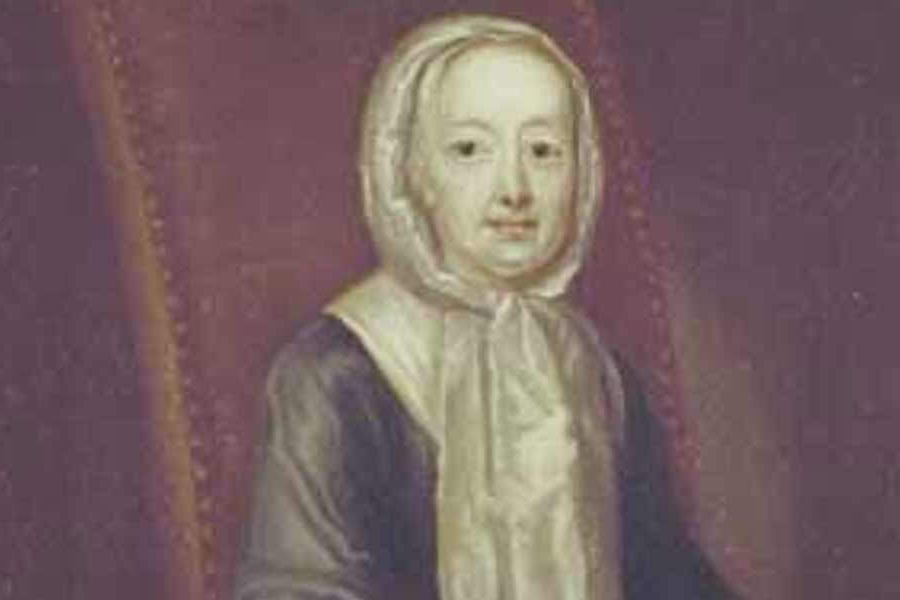
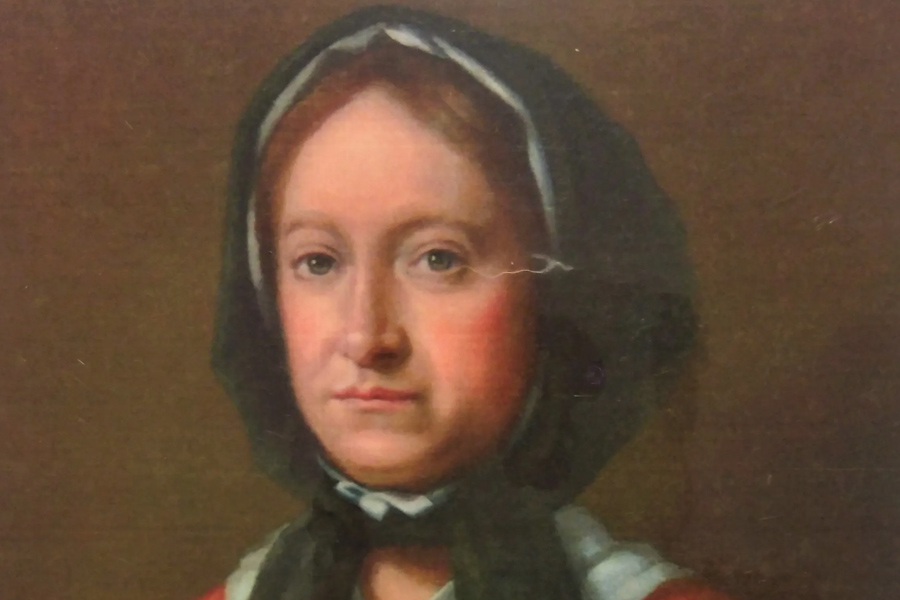
The map bears her name. Her Bristol surname is reflected in Philadelphia’s Callowhill Street. The US accorded her and William Penn Honorary Citizenship in 1984. Pennsylvania named her its first female governor in 2013, and a 2014 painting immortalized her.
Timeline – The Arc of a Quiet Power
| Year | Event |
|---|---|
| 1671 | Born in Bristol, 11 February |
| 1696 | Married William Penn, 5 March |
| 1699 | Sailed to Pennsylvania while pregnant |
| 1700 to 1708 | Eight children born after 1697, with multiple early deaths |
| 1701 | Returned to England as debts mounted |
| 1712 | William Penn’s strokes; Hannah assumes governance |
| 1714 | Maryland boundary dispute addressed using original royal deed |
| 1718 | William Penn dies; his will secures her proprietary control |
| 1718 to 1726 | She governs from England through deputies, preserves the estate |
| 1726 | Dies in London, 20 December; buried at Jordans |
| 1984 | Honorary United States Citizenship awarded |
| 2013 | Proclaimed Pennsylvania’s first female governor |
How She Governed – Tools and Tactics
Hannah’s statecraft was administrative, not dramatic. She meticulously recorded land grants, tightened issuing procedures, and utilized correspondents to verify surveys and quit rents. Deputies were trusted yet replaced when they strayed. She read the Board of Trade’s moods and complied when sensible, resisted when required, and preserved the proprietary core.
Quaker restraint helped. She wrote plainly, judged slowly, and rarely raised the temperature of a dispute. Yet when inheritance rights or colonial autonomy were at stake, her letters could cut like a plane through green wood.
A Legacy of Law and Balance
Structure is Hannah Callowhill Penn’s lasting legacy. She protected Pennsylvania’s framework as many private colonies fell to the Crown. She showed women how to lead without charisma. She maintained clean accounts, logical policies, and stable priorities: peace with Native neighbors, legal fairness, predictable land policy, and solvency. She left a commonwealth-worthy province.
FAQ
Was Hannah Callowhill Penn actually the governor of Pennsylvania?
She served as Acting Proprietor from 1712 to 1726, wielding the powers that in practice made her the colony’s executive leader. Pennsylvania has formally recognized her as its first female governor.
How did she end up in charge of the colony?
William Penn’s strokes in 1712 and his will in 1718 transferred control to her, and she successfully defended that authority in court.
Did she ever live in Pennsylvania?
Yes, she lived at Pennsbury Manor and in Philadelphia in 1699 to 1701 before returning to England.
What was her biggest challenge?
Stabilizing massive debts while fending off legal challenges that threatened to strip the family of the colony.
Did she negotiate with Native nations?
She directed treaty renewals and diplomacy with Lenape, Conestoga, and Iroquois partners through deputies and correspondence.
How is she remembered today?
By honorary U.S. citizenship, a gubernatorial proclamation recognizing her leadership, commemorative portraits, and Philadelphia’s Callowhill Street.